Leadership Future Trends
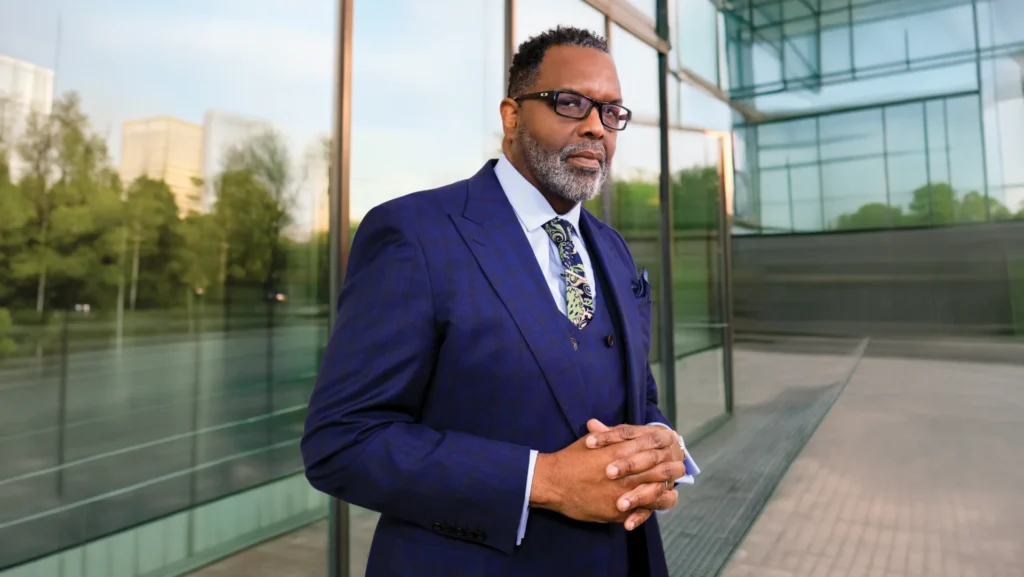


Craig Burgess has built a legal function from the ground up at one of America’s most historic colleges, blending strategy, technology and purpose. In doing so, he is shaping a more modern approach to legal leadership in higher education while helping to safeguard a legacy that extends far beyond the campus gates.
At the outset, everything pointed in one direction. A return to Charleston, where he excelled as a cadet and all conference basketball player at The Citadel. Private practice at an elite law firm. A clear and steady climb through the ranks from associate to partner. Working in Big Law for Nelson Mullins Riley & Scarborough, it seemed to Burgess that the plans he had for his future were not only possible but already underway. Early courtroom opportunities had helped shape a confident and capable litigator. He was young, ambitious, and going places.
And yet, even as his litigation career flourished, the realities of private practice began to surface. The pressures of billable hours and business development introduced a tension between the work he enjoyed and the structure surrounding it. A move in-house to BellSouth Corporation in Atlanta, Georgia offered a welcome shift, allowing him to remain close to litigation while stepping away from those constraints.
Then came a moment that would reshape everything. Following the merger with AT&T, Burgess took a severance package and stepped away from law altogether, travelling and exploring other ambitions for nearly three years. For a time, he allowed himself to imagine a very different future, considering screenwriting and even the possibility of film school. A class he took with actress Kerry Washington made him think it was a dream that could come true. However, the financial crisis that followed forced him to return to law, but not to the path he had originally envisioned.
Instead, Burgess returned to South Carolina and, in the midst of a difficult job market, found an opportunity in higher education. What began as employment work for his alma mater, soon led to a broader role at South Carolina State University, where he was immersed in an institution facing significant legal and operational challenges. It was here that something clicked.
“I just fell in love with higher education, it felt meaningful,” he says.
That sense of purpose has guided him ever since. After several years at Columbus State University, Burgess joined Morehouse College, a historically Black college founded in 1867 and woven deeply into American history. Counting Martin Luther King Jr.,
Spike Lee, Samuel Jackson, US Senator Ralph Warnock, and former Atlanta mayor Maynard Jackson among its most distinguished alumni, Morehouse has long stood as a beacon of leadership and intellectual excellence, shaping men who have influenced not only the United States but the wider world.
“I just fell in love with higher education, it felt meaningful.”
Craig Burgess, General Counsel and Chief Compliance Officer at Morehouse College
For Burgess, the move was not simply a career step, but an immersion into a legacy that has only deepened his sense of purpose.
“You feel the history, the aura,” he says. “It gives you this sense of wanting to protect that legacy.”
When Burgess arrived at Morehouse, there was no formal office of general counsel. Legal work was largely outsourced, and internal structures were limited. One of his first priorities was to bring greater control and visibility to the function.
Drawing on his experience building a legal team at Columbus State, Burgess took a measured approach. Rather than scaling quickly, he focused on identifying immediate needs and building from there. The college’s pending litigation portfolio, and exorbitant outside counsel fees, was the first area to address. Contract management was next, followed by board governance and compliance.
His team today remains small but carefully constructed. Each role is designed to relieve pressure and enable a more strategic focus. That is critical, because for Burgess, legal leadership is about more than simply responding to issues as they arise.
“You have to do the day to day, but you also have to have a long-term framework,” he says. “Our team will grow but at a pace that makes sense for the college.”
At Morehouse, that framework is shaped by both opportunity and responsibility. The college is growing, with new developments, partnerships and initiatives underway, along with a new president. Burgess is clear that legal should not stand in the way of that progress, but nor should it allow the institution to move forward without careful consideration.
“I don’t consider myself the office of no,” he says. “If it’s feasible, if it’s legal, we can make it happen.”
That openness is balanced by a litigator’s instinct to think ahead. With more than 40 trials under his belt as a first-chair attorney, Burgess still visualises how matters might unfold long before they reach a courtroom. There are moments, he admits, when he will close his office door and quietly rehearse arguments to himself, testing how a case might land months or even years down the line. It is a habit that speaks to both his roots and his discipline, and one that continues to shape how he approaches risk and decision making.
Managing that balance with a small team requires the right infrastructure, and for Burgess, that comes from technology. Central to this has been his embrace of legal tech, with platforms such as LawVu bringing structure to what was previously a fragmented environment. Having systems for contract and matter management means he has gained efficiency and visibility, enabling faster, more coordinated internal communication. “It has really been a saving grace for me,” he says. “I couldn’t do my job without it.”
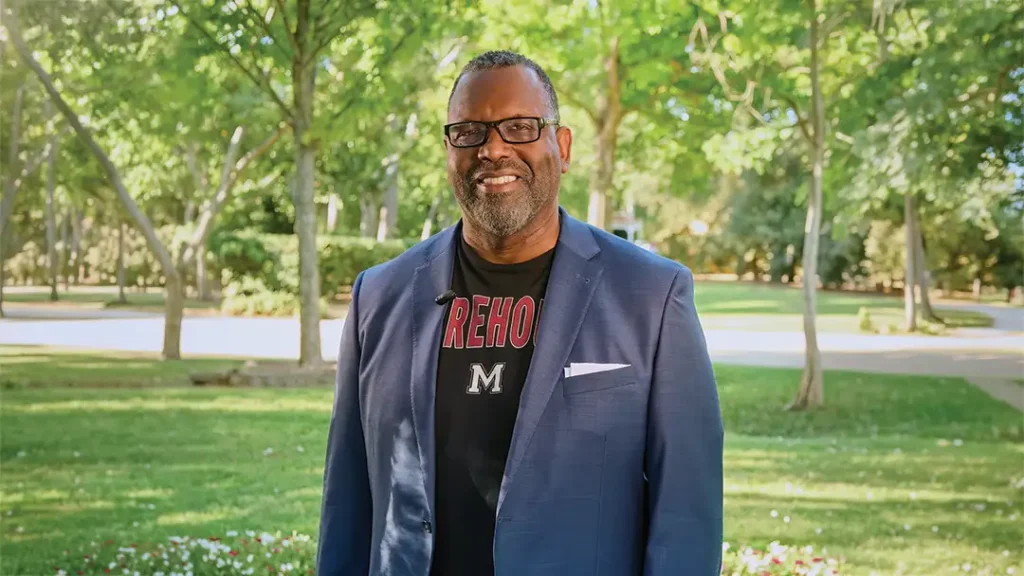
But this is not simply about efficiency or cost reduction. It is about redefining how legal work is delivered and how in-house teams create value. By bringing more work internally and using technology to enhance productivity, Burgess has been able to provide more responsive support while also creating space for strategic engagement. Legal leaders, he believes, must operate on multiple levels, addressing immediate issues while anticipating future challenges.
Nowhere is that mindset more evident than in his use of artificial intelligence, which he describes as functioning like “a really sharp mid-level associate,” capable of producing work that can be refined and built upon. The impact has been both immediate and measurable. In just 18 months, he has reduced Morehouse’s outside counsel spend by approximately 90 per cent, a result he attributes directly to the efficiencies created by AI and legal technology. “I’m proud that I’ve reduced the legal spend by over $4 million in the time that I’ve been here. I’d rather that money be in the hands of our students, faculty, and staff, not outside counsel.”
At the same time, he remains grounded in the fundamentals of the profession, where continuous learning, adaptability, and sound judgment are essential. Technology may change how lawyers work, but it does not change the need for thoughtful decision making.
“Technology may change how lawyers work, but it does not change the need for thoughtful decision making.”
Craig Burgess, General Counsel and Chief Compliance Officer at Morehouse College
At Morehouse, that perspective carries added weight. The institution’s mission extends beyond education. With a student body of approximately 2,700 men, it continues to produce leaders who go on to shape business, culture, and society in outsized ways.
“Our students literally leave and think they can conquer the world,” Burgess says. “And some do.”
His role, in many ways, is to help ensure that remain possible. “I want to do my part in protecting MLK’s legacy and moving it forward.”
In doing so, Burgess is not simply building a legal function. He is helping to steward an institution whose influence reaches far beyond its campus and ensuring that its next chapter is as impactful as its last.