Heather Kidd
Senior Editor & Writer
at LawVu
The most effective Chief Legal Officers (CLOs) are no longer content to manage risk from the inside. They are stepping into the arena: shaping regulatory environments, building industry coalitions, and influencing the external forces that determine whether their businesses sink or swim.
For most of its history, the legal department has been the organization’s last line of defense: reviewing contracts, managing disputes, ensuring compliance, and quietly fixing problems as they arose. That model is no longer adequate. The most consequential threats facing modern businesses rarely originate inside the organization. They come from legislation drafted by policymakers who may have little understanding of the industries they are regulating, from trade disputes resolved in Washington or Brussels, with consequences felt in manufacturing plants in Missouri or Yorkshire. They stem from shifts in global competition that erode domestic markets before most businesses recognize the trend. A legal team focused entirely inward will always be responding to consequences, never influencing causes.
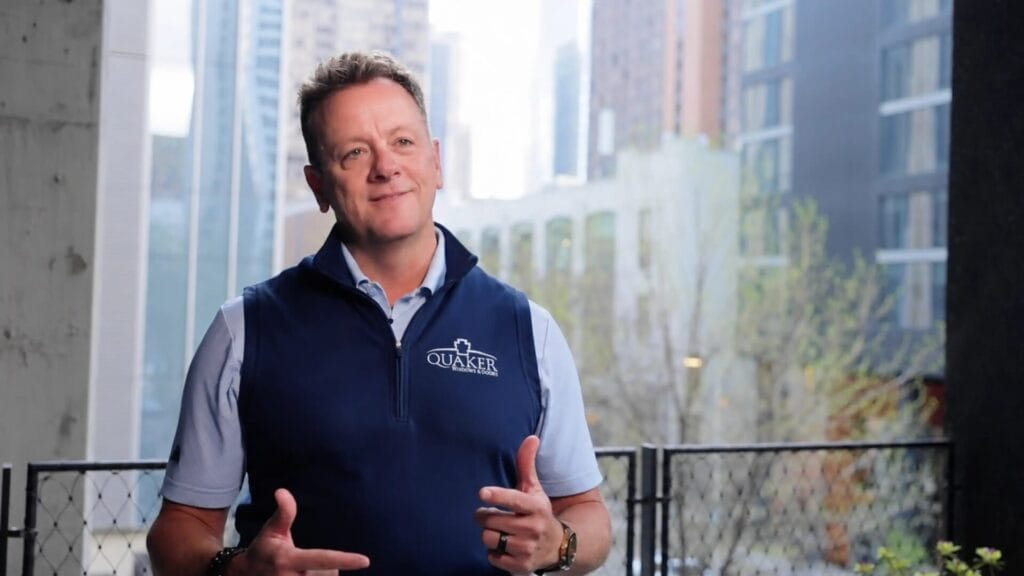
Chip Gentry, Chief Legal Officer at Quaker Windows & Doors, understands this acutely. The Missouri-based manufacturer, a 77-year-old family business that has grown into a vertically integrated producer of residential, luxury, and commercial fenestration products, operates in a market that has been profoundly shaped by forces well beyond its control. Housing affordability has stalled construction activity. Mortgage rates have suppressed demand. Supply chains remain fragile. And foreign competition has flooded the domestic market at a pace that has surprised even the most experienced industry observers.
“Manufacturing in the US is not for the faint of heart,” Gentry says. “Between administration changes, politics, geopolitical challenges, and headwinds, it is extremely challenging. And our market is dramatically changing weekly.” The window and door industry, he notes, is relatively small in the grand scheme of things, which makes it both vulnerable and, in some respects, easier to mobilize. Competitors that once seemed invulnerable have closed plants. Private equity has consolidated others. The competitive market that existed even three years ago looks nothing like the one businesses are navigating today.
For Gentry, the response has not been to retreat into legal operations and wait for clarity. It has been to engage: actively, visibly, and with a degree of urgency that reflects the scale of the challenge.
There is a reason the most effective industry advocates are often legal leaders rather than operational executives or communications professionals. The CLO’s vantage point is uniquely broad. They see across divisions, across functions, and across the boundaries of the organization itself. They are trained to synthesize complex and often contradictory information quickly. They are experienced in navigating stakeholders who hold competing interests. And they carry a credibility with both internal executives and external policymakers that is difficult for other functions to replicate.
Gentry’s journey into tariff advocacy illustrates this vividly. Sixteen months ago, by his own admission, he knew little about the mechanics of trade policy. What he understood was how to learn quickly, how to identify the people who mattered, and how to build the coalitions capable of driving change. “If you had asked me 16 months ago what I thought about tariffs, what I thought about unfair trade, I would have told you I know zero,” he says. “And it became very clear to me in my role that not only getting in with our two main industry associations, working towards leadership roles, talking to the relatively new CEOs of those industry associations, and more importantly, our direct competitors, we’re all in the same room trying to figure out how can we protect our industry.”
He immersed himself in the details: learning the structures of the Department of Commerce and the International Trade Commission, the mechanics of Section 232 and Section 301 tariffs, the ways overseas competitors were circumventing existing rules, and the role of Customs and Border Protection in enforcement. This was not background reading. It was the groundwork for a practical advocacy campaign, built on evidence, advanced through coalition, and aimed at creating structural change. As Gentry puts it: “You must be in the pool where these decisions are being made, and have seats at the table, and be in the room. Because if you’re just a spectator, good luck.”
What Gentry is building goes well beyond individual lobbying. He has industry traction and momentum to establish a formal coalition so that a collective, collaborative strategic approach can launch, and concrete action steps can be agreed upon.
The scale of the competitive threat has given the coalition urgency. At the International Builders’ Showcase three years ago, Gentry observed around two foreign competitors exhibiting. In 2025, the number had risen to over 20. By his most recent visit to the event in Orlando, foreign manufacturers occupied an entire pavilion. The direction of travel is unmistakable, and it has sharpened the resolve of everyone in the room.
The formal coalition will follow antitrust guidelines by having competitors share information confidentially with the coalition’s legal counsel, where individual data will be scrubbed and aggregated to seek meaningful action from the various governmental agencies to combat unfair foreign competition and hold violators accountable.
What is clear, however, is that the shift from informal conversation to structured advocacy is significant. It signals that the industry is not simply complaining about a problem. It is organizing to address one.
The conversations Gentry has had within those coalition rooms reflect the value that a CLO can bring to industry-level advocacy. In direct discussions with competitors, including their own CLOs and CEOs, he has been able to share intelligence about how unfair competition is manifesting, invite others to confirm or challenge the evidence, and build a shared understanding of what is at stake. “I’ve told folks here in our divisions and our departments that legal’s goal is to educate so we can empower you so you can execute your mission for the enterprise. And so, I’m taking that same sort of energy and concept within the industry, with our competitors and other members of these associations, to educate them about the challenge.”
It is an approach that treats the CLO not as the person who manages legal exposure, but as the person who defines the strategic conversation, internally and externally.
The shift Gentry has made is not the product of a single decision. It has been built steadily, through deliberate relationship-building, a commitment to genuine expertise in industry-specific policy issues, and an internal positioning of legal as a strategic advisor rather than a reviewing function. For CLOs looking to expand their influence along similar lines, the path is well-marked, if not always easy.
The starting point is engagement. Joining industry associations matters, but passive membership achieves little. What creates influence is active participation: taking on working groups, pursuing committee leadership, developing genuine relationships with peer legal leaders, and with the CEOs and policy officers of the associations themselves. These relationships are the infrastructure of advocacy; without them, even the most compelling argument struggles to land.
Expertise matters equally. The CLO who wants to be taken seriously in a policy discussion needs to know the material. In Gentry’s case, that meant learning tariff mechanics from the ground up. For others, it might mean developing deep knowledge of sector-specific regulation, data governance frameworks, or emerging legislative agendas. The point is that credibility in external advocacy is earned through genuine competence, not through the status of a title.
Internally, the CLO’s role is to translate external complexity into language the business can act on. That means creating visibility around emerging risks before they materialize as crises, educating business leaders about regulatory developments that will shape their operating environment, and positioning legal as the function that sees around corners rather than the one that cleans up after accidents. The aspiration Gentry describes, flipping the ratio from 90 percent reactive to 90 percent proactive, is a useful north star for any legal function seeking to operate at the level of strategic leadership.
Underpinning all of this is something Gentry consistently returns to: the importance of storytelling. Data and legal precision matter, but they are not enough. “You have to be a good storyteller if you’re going to be persuasive and influential,” he says. “You have to bring the data, the facts, and the information. You must do the hard work in the background. And then you have to understand who your audience is.” It is a skill that the best advocates and the best legal leaders share: the ability to make complex things legible, and to connect the stakes of a regulatory argument to the human realities it affects.
Gentry is clear-eyed about how the story ends, or rather, that it does not end. The foreign competition filling that Orlando pavilion is not going away. The housing market headwinds are not lifting any time soon. The regulatory and trade pressures bearing down on domestic manufacturers will require sustained engagement, not a single intervention. “The tsunami is here,” he says. “And now what are we going to do about it?” For Gentry, that is not a rhetorical question. It is the one he has been working to answer every day since he took the role at Quaker’s.
That sense of urgency is perhaps the most important thing the modern CLOs can bring to the table. Legal expertise, policy knowledge, and coalition-building skills all matter. But what moves industries is leaders who treat the question of what we are going to do about it as their own personal responsibility and then go and do something about it.
Want to hear how legal leaders are expanding their influence beyond traditional legal responsibilities? Listen to David Lancelot’s conversation with Chip Gentry, Chief Legal Officer at Quaker Windows & Doors, on The Legal Leaders Podcast.