Is your inbox running your legal team? I ask GCs some version of that question a lot, though never quite so directly. What I ask is what their day looks like day to day, not the version that goes in the board update. The real one. And almost every time, the answer tells me the inbox won, buried under email, Slack pings, Teams chats, and the odd hallway conversation nobody ever wrote down.
There’s no structure to any of it. It’s just a pile of work, and everyone in the business knows they can add to it whenever they feel like it.
I don’t think that’s a people problem. I think it’s a design problem. Legal work was never really built as a system; it just grew that way. Most legal tech didn’t fix that, it just digitized the pile.
I heard a version of this from a GC not long ago. One of her lawyers went on leave, and a request just sat there, nobody else even knew it existed until the person who sent it chased it up. Around the same time, a routine policy question was sitting in the same queue as an actual commercial negotiation, because there’s no way to tell them apart until someone opens the email. Multiply that across a whole team and you get deals stalling, hires slipping, for no better reason than nobody could see what was in the pile.
Ask most GCs what their team’s working on right now and they’ll tell you, no problem. Ask for the full picture, every request, everything in flight, and you’ll usually hear “let me pull that together and get back to you.” Nobody set out to run it this way. It just happened over time, and eventually it started looking normal.
None of this ever struck me as a normal way of working, so I kept asking why. Why did nobody question any of it? Expertise explains why things ended up this way. But not having a legal background meant I never had to accept it.
The pushback I get most is that direct email makes legal more accessible. Anyone can reach the team whenever they want. No forms, no portals, no barriers.
But accessible and functional aren’t the same thing. Being reachable isn’t the same as being responsive, and an open invite to email can easily become a black hole, no visibility into whether the request’s even been seen, who’s looking at it, or when you’ll hear back. That’s not genuine accessibility, that’s just hoping someone checks their inbox in time.
What I’ve come to think real accessibility looks like isn’t about how easy it is to send something. It’s about how easy it is to get an answer back.
An inbox is also just a dead end, on top of everything else. A request comes in, gets actioned, and disappears into a thread, and whatever you learned from it just goes with it. I’ve had GCs tell me they’ve got no real idea how many NDA requests came out of Sales last quarter, or that Marketing’s been asking the same three questions for months and nobody’s thought to just write the answer down somewhere. It’s not that the knowledge doesn’t exist. It just doesn’t go anywhere.
Turning every request into something you can see
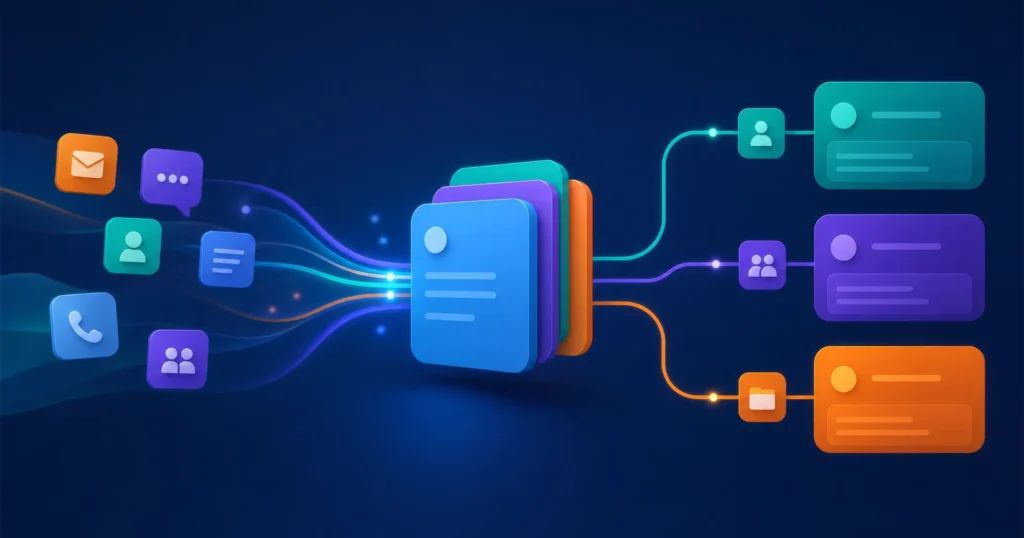
This is basically the reason we built LawVu the way we did, not as another portal, but to close that gap. The idea is to meet people wherever they’re already working, in LawVu, Teams, Slack, Salesforce, Claude, whatever, rather than force everyone through one new system.
This is also where often the AI conversation in legal jumps ahead of itself. Everyone wants to talk about AI managing risk or making judgment calls, when a big unlock right now is just clearing out the easy stuff before it ever reaches a lawyer. If a FAQ can get answered straight away without any delay, that’s the win.
Once something needs an actual person, the LegalOS already knows where it came from, what it’s about, and roughly who should handle it. Routine stuff gets routed automatically, higher risk gets flagged and escalated, without someone manually reading every request first. It’s about cutting the friction between the business and legal, without expecting them to learn how legal operates first. They should just be able to ask.
Here’s the thing an inbox can never give you. Every request logged and measurable. Which departments generate the most work. Which types of requests are growing. How long things genuinely take, not how long you assume they take. That’s the kind of detail that lets a GC walk into a resourcing conversation with actual evidence instead of a gut feel.
And none of that sits off in its own corner either. Every request becomes part of the wider legal picture, connected to the contracts, the matters, and the decisions already made before it. Every interaction adds to the foundation AI can reason over down the line, so legal gets a little smarter with each request instead of starting from scratch every time.
That’s the real difference between an intake system and an operating system.
This is the first in a seven-part series looking at what sits inside a legal operating system, one capability at a time. Next up: what happens once a request becomes a matter, and why most teams lose visibility the moment it does.