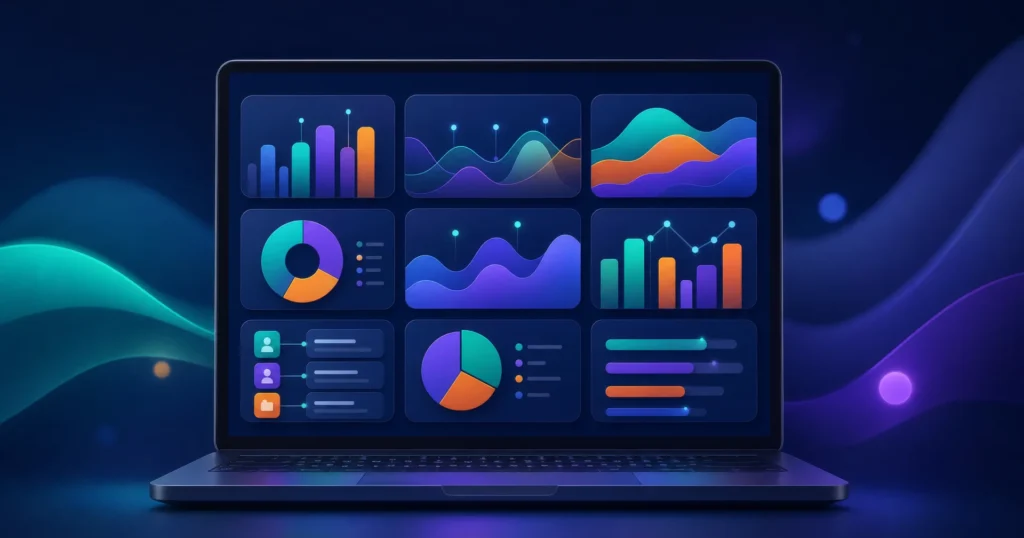
How many dashboards does your legal team have open right now? And more importantly, how many are genuinely helping you make better decisions?
For years, in-house legal teams had very little meaningful data they could easily get their hands on. Matters lived in inboxes. Contracts lived in shared drives. Spend sat somewhere in spreadsheets and with Finance. Reporting usually meant asking three different people to update a spreadsheet before the board meeting.
Then legal technology arrived and suddenly teams could measure almost everything. So they did! Matters opened. Matters closed. Contracts signed. Turnaround times. Workload by lawyer. Outside counsel spend. Intake volumes. If it could be measured, it ended up on a dashboard somewhere.
We fell into this trap at the start with LawVu. If it was collected, we should display it. But what did this really show? They were vanity metrics: 220 matters opened, 45 contracts executed. So what?
The trouble is, collecting data and creating insight aren’t the same thing. I think this is where a lot of legal teams accidentally head down the wrong path. They spend months building reports that tell them everything that’s happening, but very little about what really matters. A dashboard becomes a destination instead of a tool.
The better question isn’t, “What can we report on?” It’s, “What decisions are we trying to make?” Because that’s ultimately what data is for. The best legal teams I know don’t measure everything. They work backwards from the outcomes they’re trying to achieve.
If the business is focused on accelerating revenue, legal should understand where contract processes are slowing deals down. If cost management is a priority, legal should know where external spend is creating value and where it isn’t. If the organization is expanding into new markets, legal should be able to see where demand is growing before it becomes a bottleneck.
Those are business conversations, not legal conversations. The dashboard isn’t there to prove the legal team is busy. It’s there to show whether legal is helping the business achieve its objectives.
That’s a very different mindset. It also changes what a LegalOS should do. I don’t think its job is simply to collect information from intake, matters, contracts, and spend, then present it back as another collection of reports. Plenty of systems can do that.
A legal operating system should connect those pieces together, so the information becomes meaningful. It should help you understand where work is creating value, where risk is increasing, where resources are stretched, where outside counsel spend is drifting, and where your team can have the biggest impact on the business. That’s what turns data into decisions.
One of our customers, said something that stuck with me. Their Head of Legal Operations told us that having a legal operating system underneath everything is honestly the best foundation for AI you could ask for. Once the knowledge lives in one connected place, the intelligence becomes useful. Before that, it’s just another clever tool looking at half the picture.
I think that’s exactly right. We’ve become very good at talking about AI, dashboards, and analytics as though they’re the destination. They’re not. They’re just ways of helping people make better decisions.
The technology itself isn’t the achievement. Helping your team decide where to spend its time next week instead of simply reporting where it spent it last month. Understanding which parts of the business need more support before they become frustrated. Seeing whether legal is contributing to the company’s priorities instead of simply reporting its own activity. Those are the things that matter.
None of that replaces a lawyer’s judgment. If anything, it makes that judgment more valuable. Instead of spending time gathering information and building reports, lawyers get to spend more time making the decisions only they can make.
The legal teams that create the most value won’t be the ones with the biggest dashboards. They’ll be the ones measuring the handful of things that genuinely help them make better decisions.
This is the fifth in a seven-part series looking at what sits inside a legal operating system, one capability at a time. Next up: what it looks like when you can simply ask for the information you need, instead of hunting through screens to find it. Previous: Lower spend isn’t the same as smarter spend.