Leadership
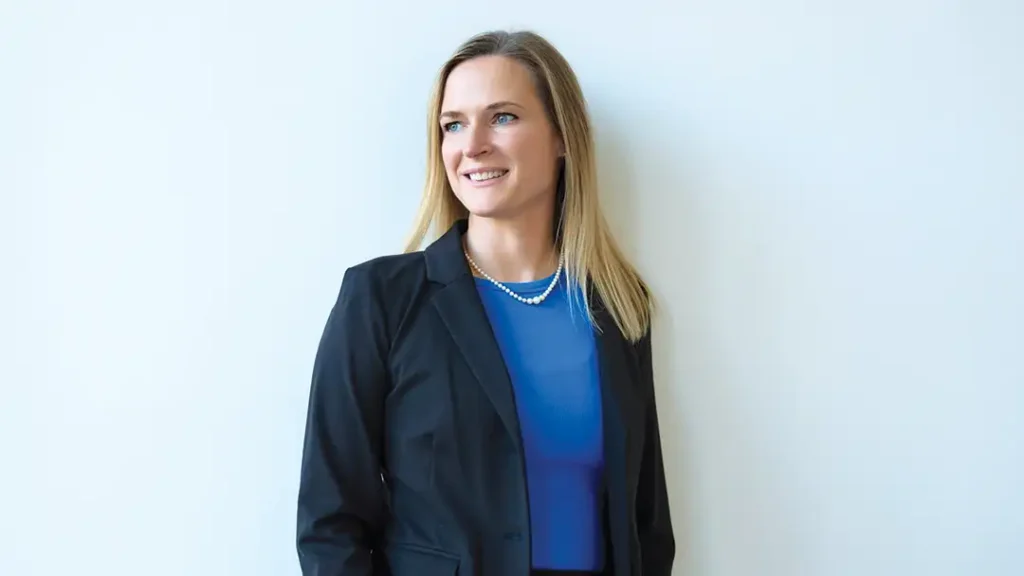


At Kansas City University (KCU), legal is not just about risk and compliance. For General Counsel, Vice President of Legal Affairs, and Chief Compliance Officer Maureen Redeker, it is about helping an institution think clearly, act deliberately, and stay focused on the people it ultimately serves.
Redeker did not set out to become a lawyer. Her early academic path leaned toward the health professions, then psychology, then business, before a series of aptitude tests pointed her toward law, a suggestion she initially resisted.
“I said, ‘I don’t want to be one of them,’” she recalls. At the time, her view of the profession was shaped by what she had seen publicly. “What I had seen on TV about attorneys,” she says, “that just didn’t appeal.”
That reluctance reflects a career shaped less by a fixed plan and more by curiosity and a willingness to explore. Redeker’s path into legal, and ultimately into higher education, was, in her own words, “not direct at all.” That breadth of experience now informs how she approaches her role at KCU.
“At the heart of our business, it’s about health care for human beings. We’re training students to provide excellent care for humans.”
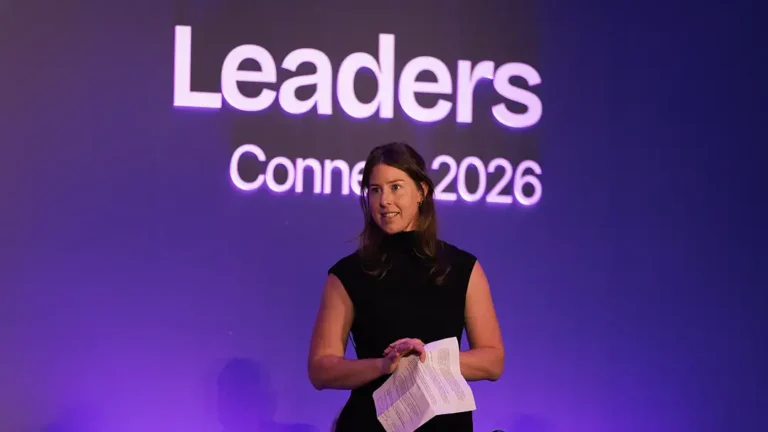
Maureen Redeker, GC, VP of Legal Affairs, and Chief Compliance Officer at Kansas City University
Higher education, she explains, is unlike any other legal environment. “Universities operate a bit like a town combined with an academic institution.” The range of issues, from employment and research to student matters, real estate, and compliance, brings together multiple disciplines in a single setting.
“It’s like this converging of different worlds into one,” she says.
At KCU, that complexity is shaped by a clear purpose. The institution focuses on training health care professionals, and that context influences how decisions are made across the organization.
“At the heart of our business, it’s about health care for human beings,” she says. “We’re training students to provide excellent care for humans.”
Redeker’s role today sits closely alongside the university’s leadership and long-term direction. She meets regularly with senior leadership, advises the board, and contributes to discussions that extend beyond legal interpretation.
“I see legal as embedded in strategy,” she says, describing a role that includes governance, policy, and institutional priorities.
That positioning has developed over time. When she joined the university in 2024, much of the work was reactive. The immediate focus was on addressing issues as they arose and building an understanding of where improvements were needed.
“My first year was a lot of reactive work,” she says. “But in the last six months, we have been able to move more and more to proactive work.”
A significant part of that shift has been building stronger foundations. Redeker focused on improving policies and making them more accessible, so that staff and faculty can make informed decisions earlier, rather than seeking advice after issues have developed.
This has created space for a different kind of legal work. Questions about long-term obligations, institutional capacity, and future impact are now part of regular discussions. It reflects a broader view of the general counsel role, one that includes helping the organization think ahead.
Redeker is familiar with the perception that legal teams can be seen as obstacles within organizations. Her response is not to dismiss that idea, but to reshape it. “I never want to be an office of no, but sometimes it’s healthy to be an office of pause,” she says.
“I never want to be an office of no, but sometimes it’s healthy to be an office of pause.”
Maureen Redeker, GC, VP of Legal Affairs, and Chief Compliance Officer at Kansas City University
That pause allows an organization to consider what a decision might mean beyond the immediate objective. It encourages departments to think about whether the necessary infrastructure is in place, how obligations will be managed, and what the longer-term impact might be.
In a university environment, where decisions often affect multiple areas at once, that moment of reflection can be important. It is less about slowing progress and more about ensuring that it is sustainable.
Redeker’s approach reflects a wider shift among in-house legal teams. Legal is increasingly involved earlier in decision making, not simply reviewing outcomes but helping shape them.
Redeker is clear about the impact technology is already having on the legal profession. The ability to use AI and other tools is no longer optional.
“The ability to use technology is inescapable,” she says, adding that those who cannot leverage it for efficiency and effectiveness risk being left behind.
That shift is already being felt by those entering the profession. Many of the traditional entry level legal tasks are being reshaped or replaced by technology. For Redeker, this means new lawyers will need to adapt quickly. They will need to learn how to use these tools effectively and develop the capability to contribute at a higher level much earlier in their careers, with the kind of judgment that was once expected of more experienced lawyers.

At the same time, she sees this as an opportunity to redefine where legal adds value. Within her team, there is a focus on helping colleagues think more broadly about decisions as they arise.
When a contract or question comes in, the role of legal is not limited to reviewing terms. It includes helping departments understand how that decision fits within the wider university strategy and asking questions that may not otherwise be considered.
“I see that as part of our role, and that’s how we enhance the value for KCU,” she explains.
This is where business awareness and strategic thinking become critical. As routine work becomes more automated, lawyers are expected to use that capacity to bring context, judgment, and a broader perspective to their advice.
Alongside this, Redeker believes soft skills will only become more important. Knowing how to work with clients, how to deliver difficult advice, and when to have a conversation rather than send an email all influence how effective that advice
will be.
“There’s always this balance of efficiency and effectiveness and connection with the colleagues we serve,” she says.
This thinking is shaping how her team approaches its work. As part of a team development initiative, Redeker has asked her group to read Unreasonable Hospitality, a book focused on elevating service and client experience.
“If 10 years ago you would have told me that we were going to read a book about hospitality as a legal office, I would not have believed you,” she says. The relevance lies in how legal interacts with the rest of the organization.
“How do we give them that exceptional hospitality and help them know they’re valued by our team?” she asks.
The goal is to ensure that legal is not only efficient, but effective in how it engages. When people feel supported and understand the value of legal input, they are more likely to involve the team earlier and integrate legal thinking into their processes.