Legal teams manage decisions, not documents. MCP makes information easier to reach, but it can’t preserve the reasoning behind a decision – and that’s where the real knowledge sits.
One thing I’ve noticed is that legal teams spend a lot of time talking about documents when what they’re managing is decisions.
We talk about contracts, playbooks, clause libraries and repositories because they’re tangible. They can be stored, searched, compared and reported on. But the value of a legal function rarely sits in the document itself; it sits in the judgement that created it.
That’s why I find the current excitement around Model Context Protocol, or MCP, so interesting.
MCP has quickly become one of the dominant themes in legal tech conversations. Much of the discussion focuses on its potential to give AI access to more systems and, therefore, more of the information legal teams work with every day.
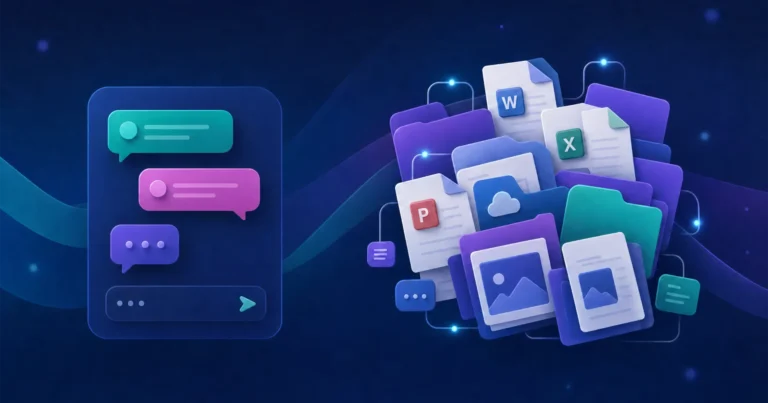
I understand the excitement. For the first time, AI can move beyond the confines of a single prompt and reach into contract repositories, matter management systems, knowledge bases and internal documentation. Instead of relying solely on what it’s told, it can go and find information where it already lives.
It’s a meaningful shift, though the more I listen to the conversation, the more I think we’re celebrating the wrong breakthrough.
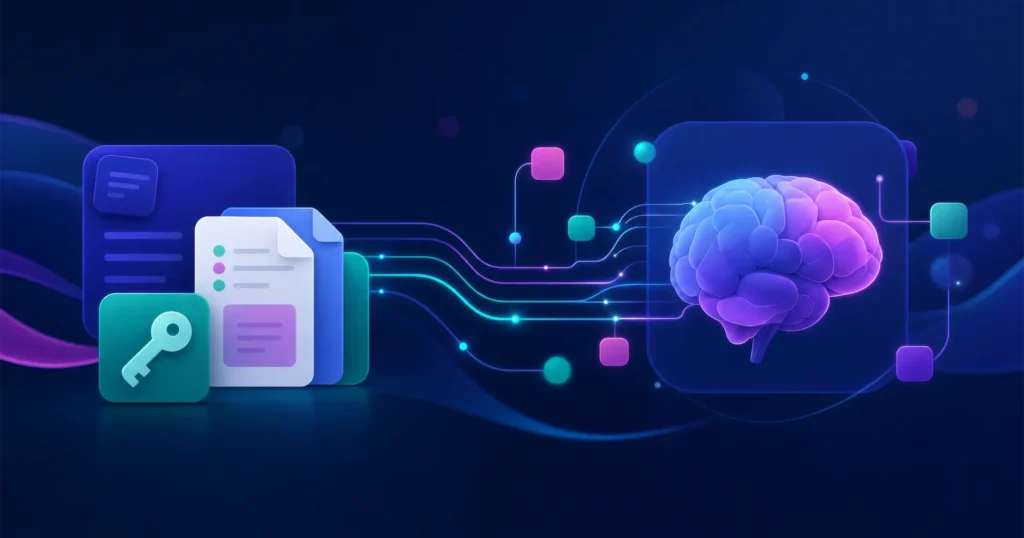
While MCP makes information easier to reach, it does nothing to preserve the reasoning behind a decision, which is where most of a legal team’s real knowledge sits.
That’s why for most legal teams; memory is the harder problem.
You can see this clearly in contract management. Connect AI to your contract repository and it can answer questions that might previously have taken hours. It can identify agreements containing a particular clause, surface contracts approaching renewal, or compare positions across hundreds of documents in seconds.
That’s genuinely useful, and legal teams should absolutely take advantage of it. But reading a contract still leaves you guessing about the decision behind it. An AI can tell you that a liability cap is higher than your standard position, but it can’t automatically tell you why. Perhaps revenue was at risk? Perhaps the commercial opportunity justified the exception, or the same request was rejected for another customer because the circumstances were different?
The contract records the outcome and leaves the reasoning somewhere else entirely. For years, we’ve been told to codify expertise through templates, clause libraries, and playbooks. That’s good advice, and every legal function should have them. But documents capture outcomes far more reliably than they do reasoning.
Legal knowledge often lives in the exceptions rather than the playbook. And while MCP can find those exceptions; understanding them is a different task.
That’s the knowledge experienced lawyers reach for instinctively; the understanding of when a rule should bend.
The challenge is that organisational memory is rarely stored as a coherent narrative. By the time a decision has been made, the outcome is recorded, but the reasoning is often scattered across systems, conversations, and people. Sometimes it isn’t captured at all.
The organisation retains the document but slowly loses the memory of why it looks the way it does.
This is where I think we’re starting to conflate access with understanding.
MCP can help AI find those fragments much faster than a person could, retrieving the relevant document, approval or correspondence in seconds. But assembling them into a story is harder.
The conversation often focuses on how many systems AI can access. I’d rather know whether those systems preserve the reasoning behind the outcome.
Connect AI to a well-structured legal operating environment, and it can become remarkably capable. Connect it to disconnected systems full of conflicting information, outdated positions and missing reasoning, and you’ve simply surfaced those problems faster.
Fast and wrong is still wrong.
The question I’d put to legal leaders is what decisions they’re leaving behind for AI to learn from.
Because the advantage will belong to the legal teams that capture their institutional memory well enough that each decision thereafter improves the next.
And even then, we’ve only solved half the problem. Memory isn’t judgement.
This is the third of six articles on what it takes to get a legal team ready for AI. Click here to read the previous article, Your AI is a brilliant stranger who’s never met your client.