One thing I’ve noticed is that legal teams rarely ask purely informational questions.
Despite the amount of attention we give to contracts, clauses, playbooks and repositories, most legal work comes down to what a team decides to do with the information once it has it.
The question is rarely “What does the contract say?” More often it’s “Can we approve this?”, “Should this be escalated?” or “What happens next?” Each of those demand judgment, context, and an understanding of how the organisation operates.
That’s why I’ve become increasingly interested in the conversation around context-aware AI.
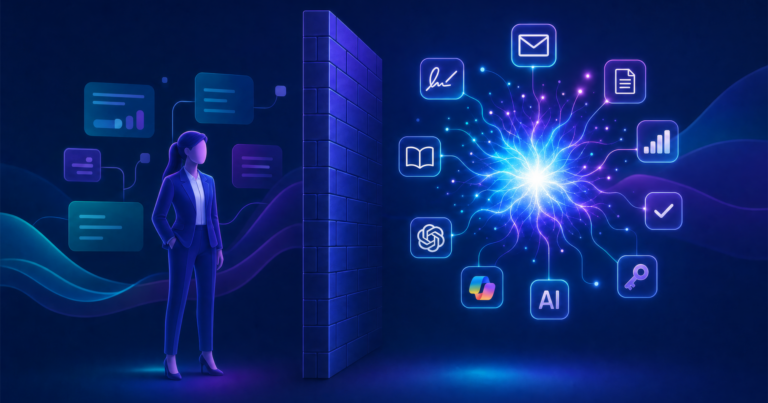
Over the last few years, the industry has made enormous progress in helping AI access information. Models can now search contracts, retrieve matter history, reference playbooks and connect to an ever-growing number of systems through technologies like MCP. As we explored in the previous article, this has helped solve a genuine problem. Information that was previously scattered across repositories can now be surfaced far more easily.
Retrieving the information, though, is only the first step towards understanding a decision.
A legal team may have a complete record of previous contracts, approvals, negotiations, and exceptions. An AI system may be able to retrieve all of them in seconds. Yet the most important question often remains unanswered: which of those things matter in the current situation?
That challenge exists because legal teams balance competing considerations rather than applying rules mechanically. The same contractual position may be approved for one customer and rejected for another. A particular risk may be acceptable in one context and completely inappropriate in another. The useful question to ask is why it happened, and whether today’s circumstances are similar enough for the same decision to hold.
Where context runs out
This is where I think we sometimes overestimate what context alone provides.
An AI that can access contracts, approvals and negotiation history is undeniably more useful than one that cannot. It has greater visibility into how the organisation has operated in the past. But visibility only goes so far, because knowing an exception was approved six months ago tells you little about whether it should be approved again. Understanding the commercial conditions, risk considerations, and organisational priorities behind that decision is considerably harder.
The distinction sounds subtle, but it matters very quickly in practice.
Consider a request for a non-standard contractual position. An AI may be able to identify similar examples from the past, retrieve previous approvals, and surface the relevant policy guidance. All of that is valuable. However, the legal team’s real task is determining whether those precedents are relevant. Has the business’s risk appetite changed? Is the commercial opportunity materially different? Have regulatory requirements evolved? Are there obligations elsewhere that now influence the decision?
The hard part is reasoning across the information once you have it.
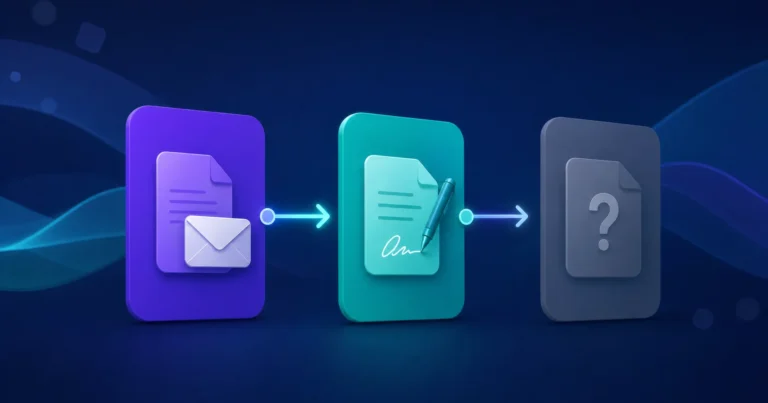
Which is why I’d be careful about viewing legal knowledge purely through the lens of documents and data. Legal functions don’t exist as collections of contracts, emails, and policies. They operate as interconnected workflows where decisions build on one another over time. Matters influence negotiations; negotiations influence future playbooks, and today’s exceptions for tomorrow’s approvals. Every decision becomes part of a larger operational system.
Viewed through that lens, the most interesting question is whether AI can reason across the relationships between all the information.
It’s also why I’ve come to think that owning the workflow matters more than owning every feature.
The legal industry often talks about AI capabilities as though they exist independently of the environment they operate within. New models appear, new integrations arrive, new features are released – and all of them matter. But legal teams experience their work as a sequence of decisions moving through a legal operating system rather than a series of disconnected features.
Information is gathered, risks are assessed, stakeholders are consulted, approvals are obtained, trade-offs are considered, and decisions are made. The value emerges from how those activities connect.
From answers to decisions
That’s why I believe the next stage of legal AI will look different from the first.
The first generation focused on helping people find answers. The next generation will focus on helping organisations make decisions more consistently. That means giving lawyers the context, history, and operational understanding they need to exercise judgment more effectively.
An AI that can tell you what happened is useful, and one that can explain why it happened is more useful still. The real opportunity, though, is an AI that can show legal teams how decisions connect across the organisation and what those connections mean for what comes next.
And even then, we’ve only solved part of the problem. A system might understand the workflow and the history, and even reason across previous decisions, but the next challenge is ensuring those decisions remain consistent, explainable and trustworthy as AI becomes embedded in everyday legal work.
That’s where this conversation is heading next.
This is the fourth of six articles on what it takes to get a legal team ready for AI. Click here to read the previous article, The problem is memory, not access.